Beyond Equilibria
Presented by Haptera Design
DETAILS
Free, no booking required
Palace Coffee
22 Ridgway Place, Melbourne VIC, Australia
DATES
Sat 23 May 11am – 5pm
Sun 24 May 11am – 4pm
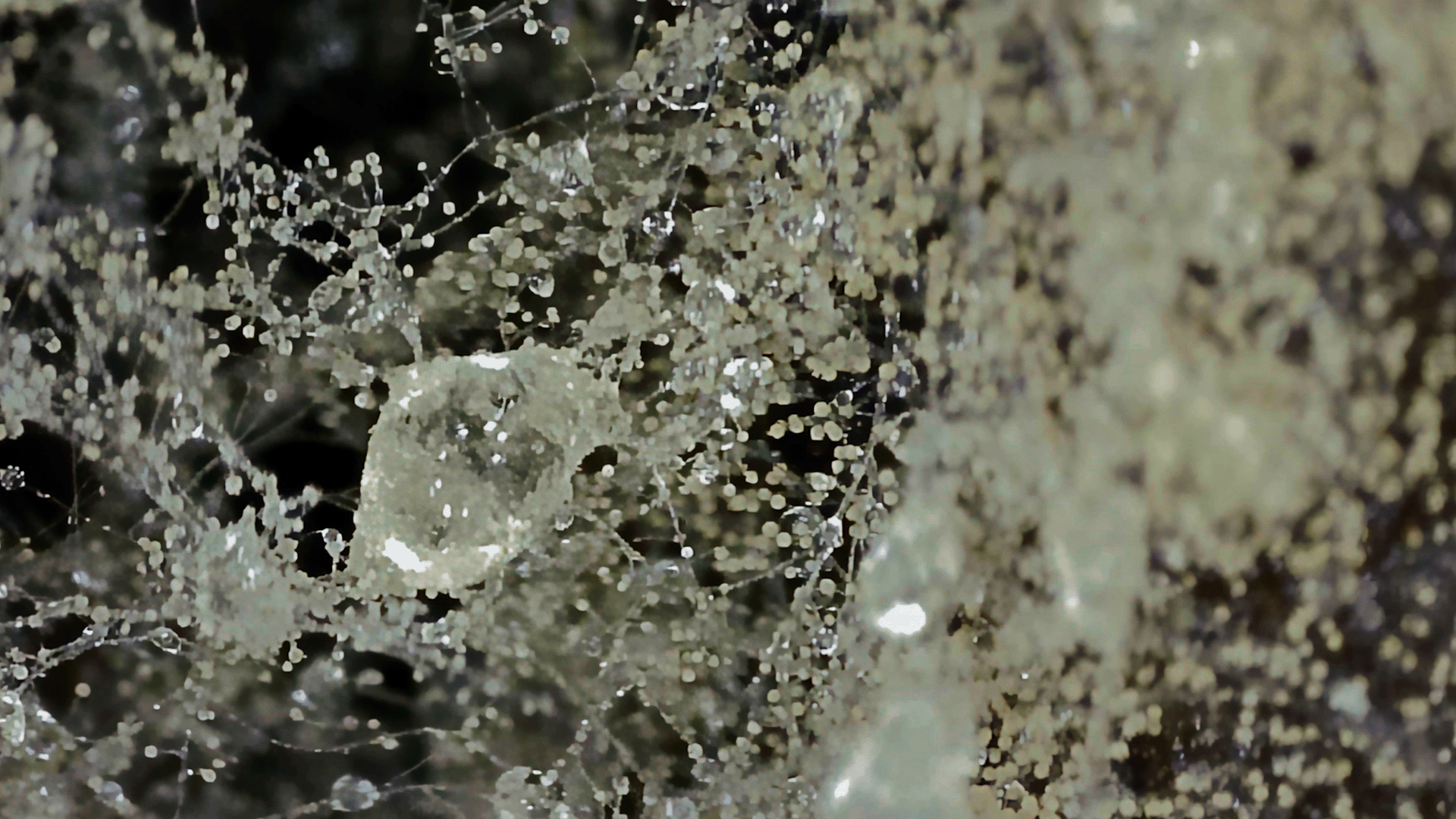
Beyond Equilibria is an exhibition exploring the boundaries between ecological systems and the human world within urban environments. From subterranean ecologies to novel aquatic systems, each designer interprets the role of design in facilitating nature-positive relationships within disturbed and often overlooked parts of our cities — spaces critical to maintaining connectivity and developing cultures of care.
Exploring a range of media and design approaches central to each designer’s practice, the exhibited works reflect the diverse approaches of designers drawing on an understanding of the entangled systems in which they work. On show is a collection of design responses that explore ideas of materiality, digital technologies and artificial habitats, offering opportunities for urban renewal within and beyond the boundaries of urban systems.
This event is proudly presented by Haptera design and ICON Science.
Participants
Bethany Kiss
Bethany Kiss is a Melbourne/Naarm-based designer and researcher whose practice explores the relationship between buildings and wildlife. Her work translates ecological data into architectural propositions, asking how buildings might be designed as deliberate habitats rather than as accidental adhoc reationships. She has exhibited at the National Gallery of Victoria (Making Good: Redesigning the Everyday, 2025) and her installation Peccable Structures opens at the Royal Botanic Gardens Melbourne in 2026. Her design practice and research is embedded within her current PhD at the University of Melbourne (School of Science).
Javier de Urquijo Isoard
Javier de Urquijo Isoard is a Melbourne/Naarm-based industrial designer from Mexico whose practice explores what happens to objects and materials after use. His practice and research focuses on prototyping materials that are designed not only for use, but importantly consider their role in decay, inviting designers to consider nonhuman actors as part of the design process. Through exploration of fabrication processes, biomaterial design and soil ecologies, his work explores decay through material palettes and digital mediums which has been showcased nationally and internationally.
Jorge Arreola
Jorge Arreola is a Melbourne/Naarm-based experience designer from Mexico whose work focusses on exhibitions, accessibility and emerging technologies. Working within the GLAM sector, his work involves turning curatorial complexity into visitor journeys that feel intuitive and welcoming where technology, storytelling and inclusive design come together to create meaningful cultural experiences.
Shane Hunt
Shane Hunt is a multidisciplinary designer and researcher whose practice explores the role of design to address ecological novelty within degraded urban waterways. Using generative approaches to develop substrates, his work investigates the potential of topological responses and their integration into the design of artificial habitats to address ecosystem novelty and drive awareness towards the hidden biodiversity of these often-overlooked ecosystems. His creative practice informs his PhD research through RMIT’s School of Design and his studio Haptera design.
ICON Science
The Interdisciplinary Conservation Science Research Group (ICON Science) is a team of researchers working to better understand and manage the interactions between society and our natural environment. Through a multidisciplinary approach that reconciles ecological, social and economic dimensions, ICON examines different drivers of change, often with a focus on urban and semi-rural environments to address the gap between conservation theory and real-world practice in complex planning environments.