Relics and Remains
Presented by Curtis Bloxsidge
DETAILS
Free, no booking required
Nord
261 Albert Street, Brunswick VIC, Australia
DATES
Thu 14 May 12 – 10pm
Opening night 6pm -10 pm.
Fri 15 May 11am – 4pm
Sat 16 May 11am – 4pm
Sun 17 May 11am – 4pm
Mon 18 May 11am – 4pm
Tue 19 May 11am – 4pm
Wed 20 May 11am – 4pm
Thu 21 May 11am – 4pm
Fri 22 May 11am – 4pm
Sat 23 May 11am – 4pm
Sun 24 May 11am – 3pm
Throughout earth’s history, cataclysms – whether environmental, political or cultural – have reshaped landscapes and lives, leaving behind fragments that become vessels for memory. Relics and Remains considers what endures after such events. What remnants persist, what forms survive, and how meaning is carried forward through material.
The exhibition offers an immersive walk-through of a material landscape, inviting quiet, speculative propositions that exist in a space of timelessness. Each selected Australian artist, through their own practices, works with materials long associated with human making—glass, stone, metal, clay, paper, timber and textiles. The works presented imagine a time in which objects and materials become evidence, provoking questions about the fragility of the earth. What are we leaving behind now, and how might our work in this moment become fragments of a lost world?
Live soundscapes and ambience by Curtis Bloxsidge. Access via Wilkinson Street.
Participants
Alyssa Nuttall
Alyssa Nuttall is a ceramic artist based in Melbourne/Naarm. Raised in Western Australia, her practice has developed through a slow and deliberate engagement with the fragile environments that sustain life.Working with clay as both material and collaborator, she draws on its geological memory to reflect shifting Australian ecologies and the pressures shaping them, including drought, bushfire, coastal erosion and coral bleaching. Her forms emerge through carving, layering and reconstruction, guided by balance, weight and the material’s own limits. Soft asymmetry, carved strata, and subtle shifts in structure allow each piece to sit between stability and fragility — resilience and collapse.Approached as quiet presences within everyday life, her vessels hold traces of ecological grief alongside endurance. Considered incomplete until encountered, each work invites attention, care and a closer awareness of environmental change in lived space.
Curtis Bloxsidge
Curtis Bloxsidge's practice emerges from a background in cabinet making, joinery and set construction, formed by a slow and deliberate development of ideas. Working between traditional handcraft and contemporary processes, he focuses on natural materials to create bold, minimal pieces that are grounded, quiet and enduring.Growing up in Western Australia and now living and working on Wurundjeri land (Melbourne/Naarm), Curtis' work is informed by personal and sentimental histories. Each piece is approached not just as an object but also as a character, shaped by restraint, proportion and touch. His designs draw subtle references from the natural world and classical furniture archetypes, distilled into reduced forms that feel both familiar and considered, with emphasis placed on material honesty, surface and shadow.
Thannie Phan / gốm maker
Thannie Phan is the ceramic artist behind the practice gốm maker, based in Melbourne/Naarm. Formed within the tradition of Vietnamese hand-coiling and pinching, then developed away from its convention, her practice articulates a distinctly contemporary ceramic language. Shaped not by utility but by her narratives of place, memory, people and their imprints, the work occupies an ambivalent space, one poised between permanence and transience.Each vessel is composed of successive coils, each no more than half a centimetre thick, pinched, compressed and smoothed several times until the clay’s molecules fuse into a single continuous body. This hand-only process, sustained through measured attention and repetition, defines both its precision and fragility.
Julian Leigh May
Julian Leigh May (they/them) is a Melbourne/Naarm-based experimental designer embracing a spectrum of disciplines and mediums.Their work transcends barriers between art and design and spans furniture, lighting and object design. Central to their practice is an interest in redefining everyday objects through new narratives, material experimentations and forms.
Madeline Cardone
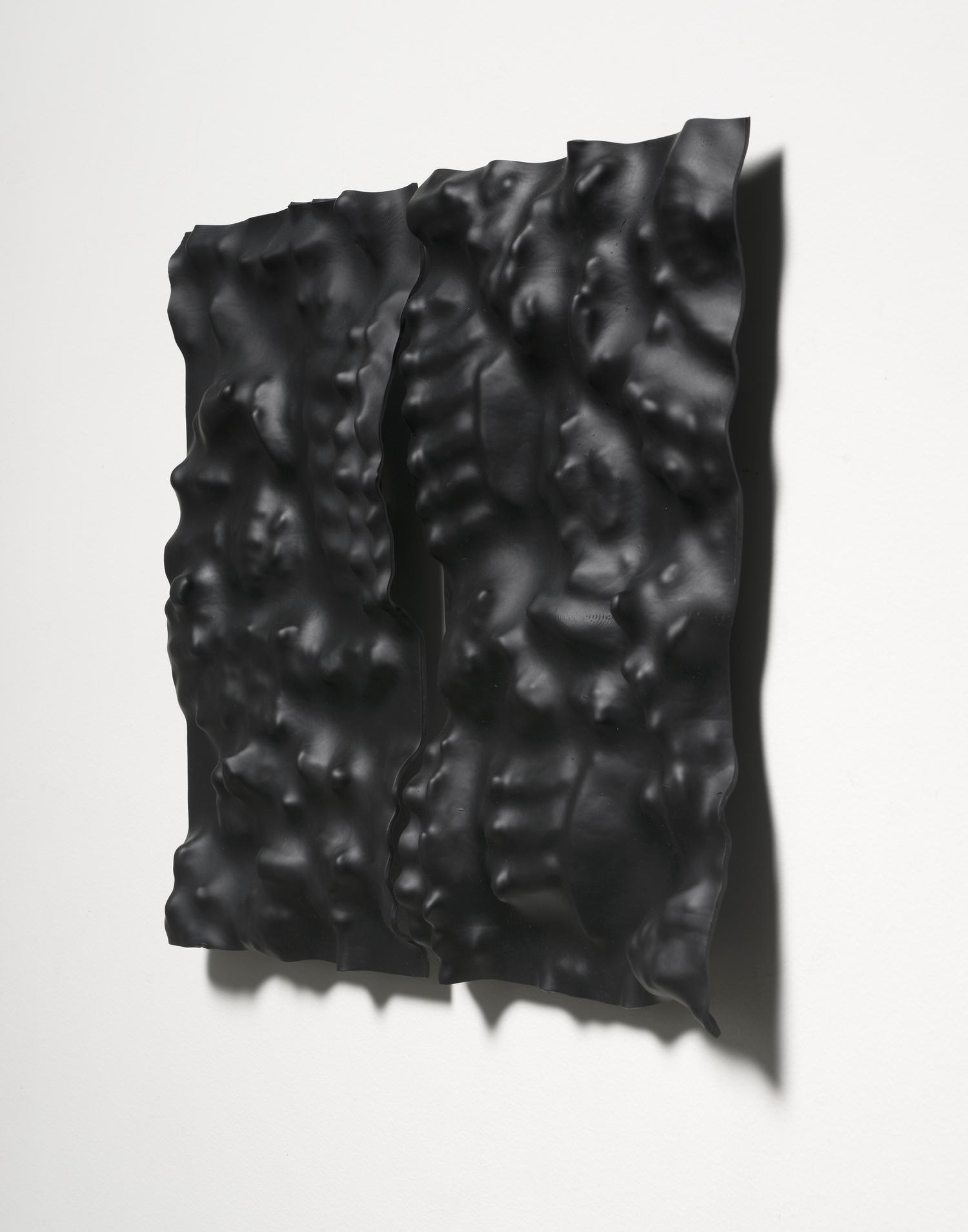
Madeline Cardone lives and works on Ngunnawal traditional lands in Canberra, and is a graduate of the School of Art and Design, The Australian National University. Her sculptural practice explores the thresholds between spaces, embodied memory and material transformation, deriving from a broader interest in archaeological, anatomical and architectural theory.Her work in glass draws on ideas of the body-as-landscape, phenomenological qualities of space and notions of memory, preservation and decay, often referring to the material as a ‘skin’. This connection to the body is personal — of being uncomfortable in one’s skin, of taking up space or surrendering to it. Her objects are not only formal studies but explorations of proximity and relationships between forms, people, the past and the present. Cardone challenges the limits and lifecycles of materials, inviting slow, tactile contemplation and evoking a strange familiarity by recontextualising and abstracting space and form, shifting expectations of what materials can hold, reflect and become.
Nicholas Burridge
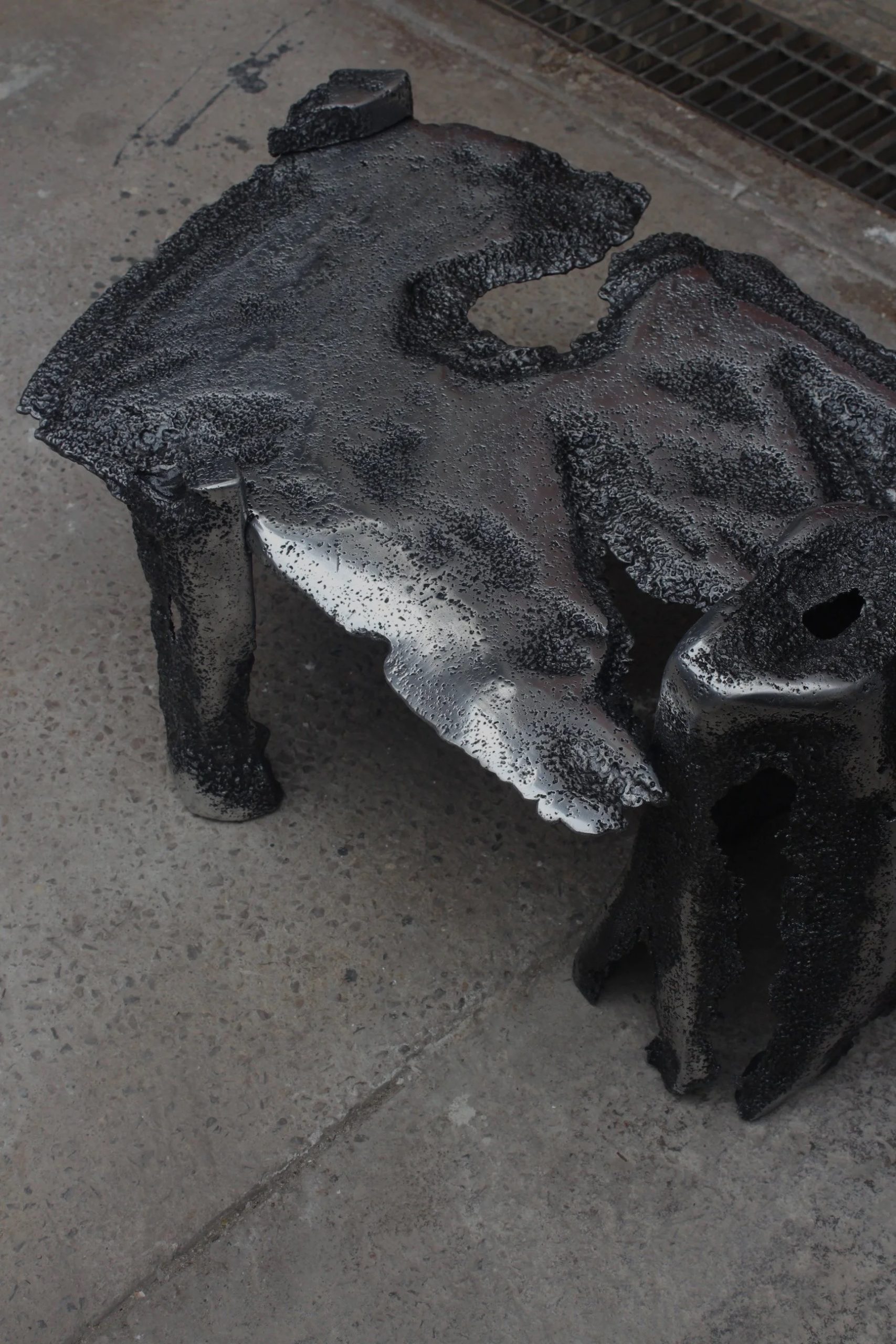
Nicholas Burridge's interest lies in the complex relationship between industrialisation and nature, with a particular focus on the earth sciences and the ways manufacturing often mimics planetary forces. This research investigates the term ‘Terraforming’, focusing attention on the ways humans are re-engineering the Earth and our current geologic epoch, the Anthropocene. His practice is expressed through material science and experimentation. This ranges from developing manufacturing processes for lava to using explosives to form metals and building machines to make or erode sedimentary rock. In all these instances, the aim is to reveal latent narratives and metaphors within materials and the ways in which people interact with them. Nicholas' projects are site-specific, drawing on place and history to contextualise the processes and materials used in the installations.
Park Minjeong
Park Minjeong’s practice centres on the use of recycled paper and other post-consumer materials to produce sculptural and functional furniture. By reusing and reprocessing materials that have reached the end of their initial life cycle, her work seeks to minimise waste generated during production and to reassess the value of discarded resources.
Nathan Martin / SATURDAY YARD WORK
SATURDAY YARD WORK by Nathan Martin is a Adelaide/Kaurna based practice that aims to find a medium between sculpture, craft, and functional objects by delving into material experimentation and processes. Embracing unorthodox production methods, Nathan seeks to uncover unexpected visual and sensory outcomes manifested in form and texture. Through the crafting of unique pieces, his experimental and process-driven design ethos celebrates the unconventional, embracing the imperfect and the intricacies of handmade objects.
Billy Crellin / Studio Dokola
Studio Dokola is focused on transforming historical and provocative design elements into modern, functional glass objects. The studio embraces the cyclical nature of design, leveraging concepts like re-melting and revival to create unique, contemporary products.
Emma Shepherd / Sundance Studio
Working from her Flinders studio, weaver Emma Shepherd practices one of the world’s oldest crafts with the sensibility of an artist deeply embedded in her environment. Her work is grounded in material knowledge and quiet experimentation, allowing the inherent qualities of yarn to guide form and composition. Thinking through fabric – its strength and structure – Shepherd has acquired an innate understanding of textiles as a universal language, and the long history of weaving as a site of innovation, intuition and intimacy.
Taylor Brooks / 2am close
Taylor Brooks, a multi-disciplinary maker based in Melbourne/Naarm, whose work centres around the interplay between interior and exterior worlds, embodiment principles, objects as active social agents, rituals and modern craft practices. Her practice draws on a background of fashion and industrial design, with a grounding in design research, particularly in how we come to know our objects and the environments these relationships form. Her making practice is realised through a range of mediums, including (but not limited to) timber, metal, cloth, knitwear, film and paper.