Future Services Studio: Imagining the Next Chapter of Australian Design Products and Services
Presented by School of Design and Architecture, Swinburne University of Technology
DETAILS
Free, no booking required
Level 6, AMDC Building
423 Burwood Road, Hawthorn VIC, Australia
DATES
Wed 20 May 9am – 5pm
Thu 21 May 9am – 5pm
Fri 22 May 9am – 5pm
Sat 23 May 9am – 5pm
Sat 23 May 10am – 12pmBook now
Workshop 1. Booking Required.Limited availability
Sat 23 May 1 – 3pmBook now
Workshop 2. Booking Required.Limited availability
Sat 23 May 3.30 – 5.30pmBook now
Workshop 3. Booking Required.Limited availability
Sat 23 May 6 – 7pmBook now
Panel Talk. Booking Required.Limited availability
Future Services Studio is an exhibition, workshop series and public discussion that empowers Australian designers to imagine how design might meet future Australian product and service needs. It invites both designers and the public to explore how emerging technologies, particularly AI, can expand the way we design the services, systems, products and experiences that define everyday Australian life.
The exhibition showcases the Future Services Radar process, a future design method that helps designers structure how they go about imagining future needs and services. It presents three interconnected displays: the Future Services Radar process and research method behind speculative service design; selected projects by emerging designers on future Australian services and designed systems; and a participatory station for the public to contribute their future imaginings of Australia’s service ideas and design artefacts.
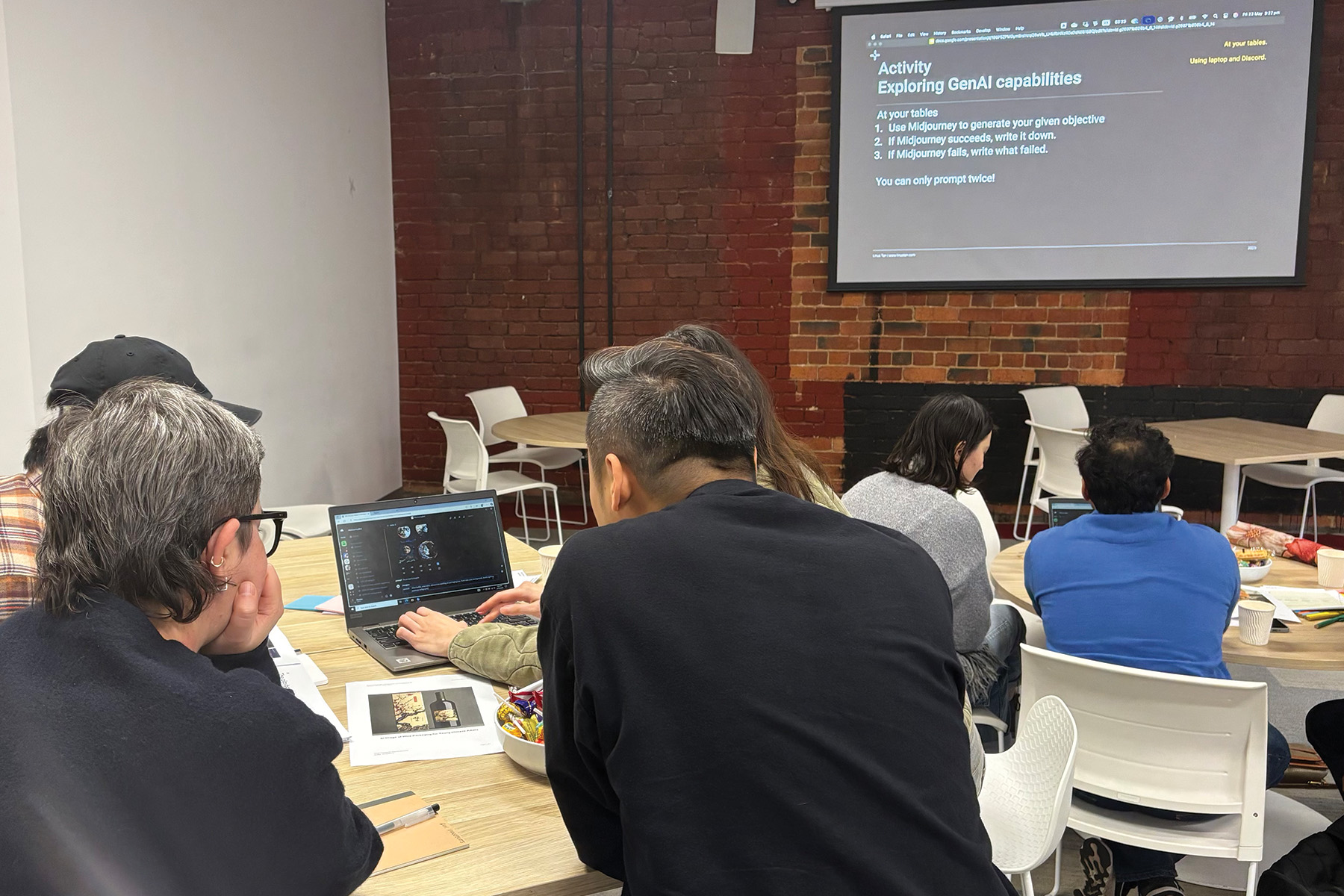
Across three workshops, participants will explore different levels of creative engagement with Generative Artificial Intelligence (GenAI). The first workshop introduces publicly available GenAI tools for design exploration and speculation. The second workshop invites participants to apply GenAI tools to imagine and prototype future Australian services. The third workshop offers a masterclass in advanced GenAI tools for design practice.
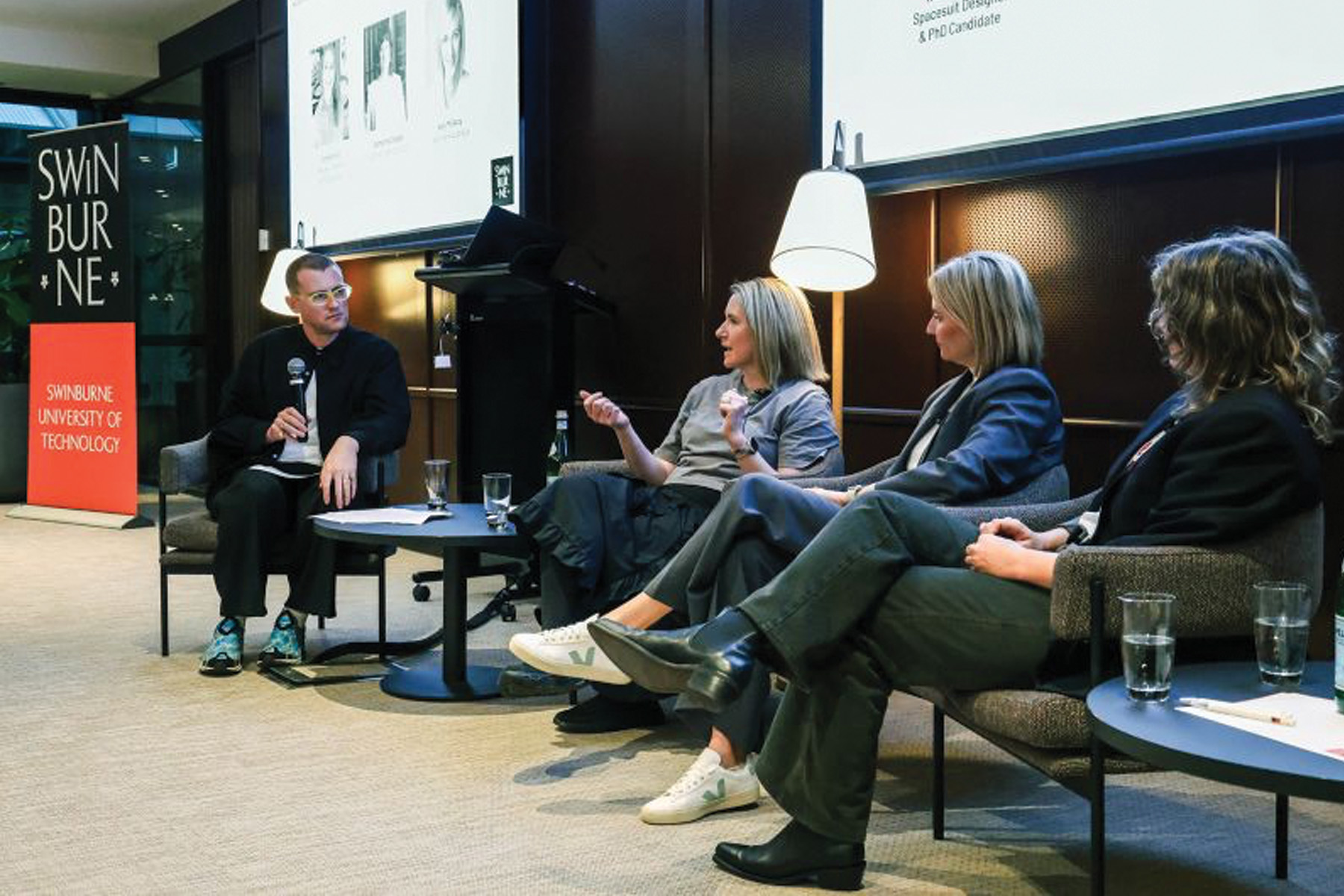
The program concludes with a public panel discussion where designers, educators and industry leaders will reflect on what future Australian services might emerge (based on the exhibition and workshop outcomes) and how today’s designers can prepare for these new opportunities and design challenges.
Participants
Dr Linus Tan
Dr Linus Tan is a design researcher and practitioner working at the forefront of AI in design. His work investigates how generative AI reshapes design cognition, visual culture and the ways designers conceive and frame future imaginaries.Drawing on both industry practice and academic research, he shows emerging designers how to use GenAI as a thinking partner that influences design judgement, iteration and creative direction.Through exhibitions and public engagement, he invites audiences to critically examine whose visions are embedded in generative systems and how designers can actively redirect them towards more inclusive and imaginative futures.
Jeremy Walker
Jeremy Walker is the Founder and Design Director of design and innovation studio CraigWalker. Prior to that he has held roles as Director of Human Centred Design at IAG and Director of Customer Centred Design for Westpac Australian Financial Services.He came to Australia sixteen years ago to bring service design expertise to the Westpac Group. Prior to Westpac he was the Lead Consultant at live|work, a dedicated service design agency in London providing consulting and service design education to a broad range of public and private sector clients, and has guest lectured at UTS and the SSE.His clients have included Aviva, Experian, Meta, Google, BBC, Procter & Gamble, NHS, Changi Airport, Westfield, Faber & Faber, Yell, Orange France Telecom, Australia Post and Neighbourhood Watch.Jeremy is at heart a Strategic and Service Designer. Over his career, working in both agency and client-side roles, he has a deep passion for generating understanding of design, creating capability and delivering transformation for organisations seeking to design new service experiences.
A/Prof Charlie Ranscombe
Associate Professor Charlie Ranscombe is a design researcher at Swinburne University of Technology specialising in human-centred product development and the integration of emerging technologies, including generative AI, in design practice. His work explores how design can translate new technologies into meaningful, user-centred outcomes.He has secured over $2 million in research funding and contributed to the translation of AI-driven customisation research into a commercial healthcare venture. Charlie has published more than fifty peer-reviewed articles and serves as a reviewer for several leading design journals. He leads the Human-Centred Product Development cluster within Swinburne’s Centre for Design Innovation and supervises PhD candidates. His current research examines how AI tools are reshaping design processes.
A/Prof Jo Kuys
Jo Kuys is the Course Director of Industrial Design in the School of Design and Architecture at Swinburne University of Technology. She holds a PhD from Swinburne University and a Master’s degree from Monash University.She also holds a Bachelor of Design majoring in Transportation Design from Hongik University, South Korea, and a Bachelor of Science from the Art Institute of Fort Lauderdale, USA.Prior to joining Swinburne in 2010, she worked as an Automotive Designer at Hyundai Kia Motors in South Korea and Holden GM in Australia.Her research and teaching expertise span human-centred and industrial design, with a strong focus on integrating AI-driven design processes within industrial design practice to support innovation, prototyping and future mobility outcomes.
Jae Yeop Kim
Jae Yeop Kim is an Assistant Professor in the Department of Industrial Design at Hongik University in Seoul, Korea, and Head of Search Creative X at Naver Corp. He is interested in the social, cultural and ethical consequences of emerging technologies.His research focuses on human-centered interaction and intelligent AI products and services, which involve voice and natural user interfaces.He led various UX design projects such as the Microsoft AI assistant, AI-powered IoT devices and smart TV projects at Microsoft AI, Nokia and Samsung.He majored in communication design at Parsons School of Design in New York and received a master’s degree in Design Interactions from the Royal College of Art in London.He also participated in global exhibitions and conferences including the Microsoft AI & Data Science Conference, MoMA, London Design Festival and Helsinki Design Week.