Age of Algae: Seaweed, Systems and Regenerative Futures
Presented by Compound
DETAILS
Free, booking required
MPavilion, Melbourne VIC, Australia
DATES
Fri 15 May 5 – 8pmBook now
Talk
Sat 16 May 10am – 6pm
Sun 17 May 10am – 6pm
Mon 18 May 10am – 6pm
Tue 19 May 10am – 6pm
Wed 20 May 10am – 6pm
Thu 21 May 10am – 6pm
Fri 22 May 10am – 6pm
Sat 23 May 10am – 6pm
Sat 23 May 11am – 1pmBooked out
Workshop
Sun 24 May 10am – 6pm
Sun 24 May 11am – 1pmBooked out
Workshop
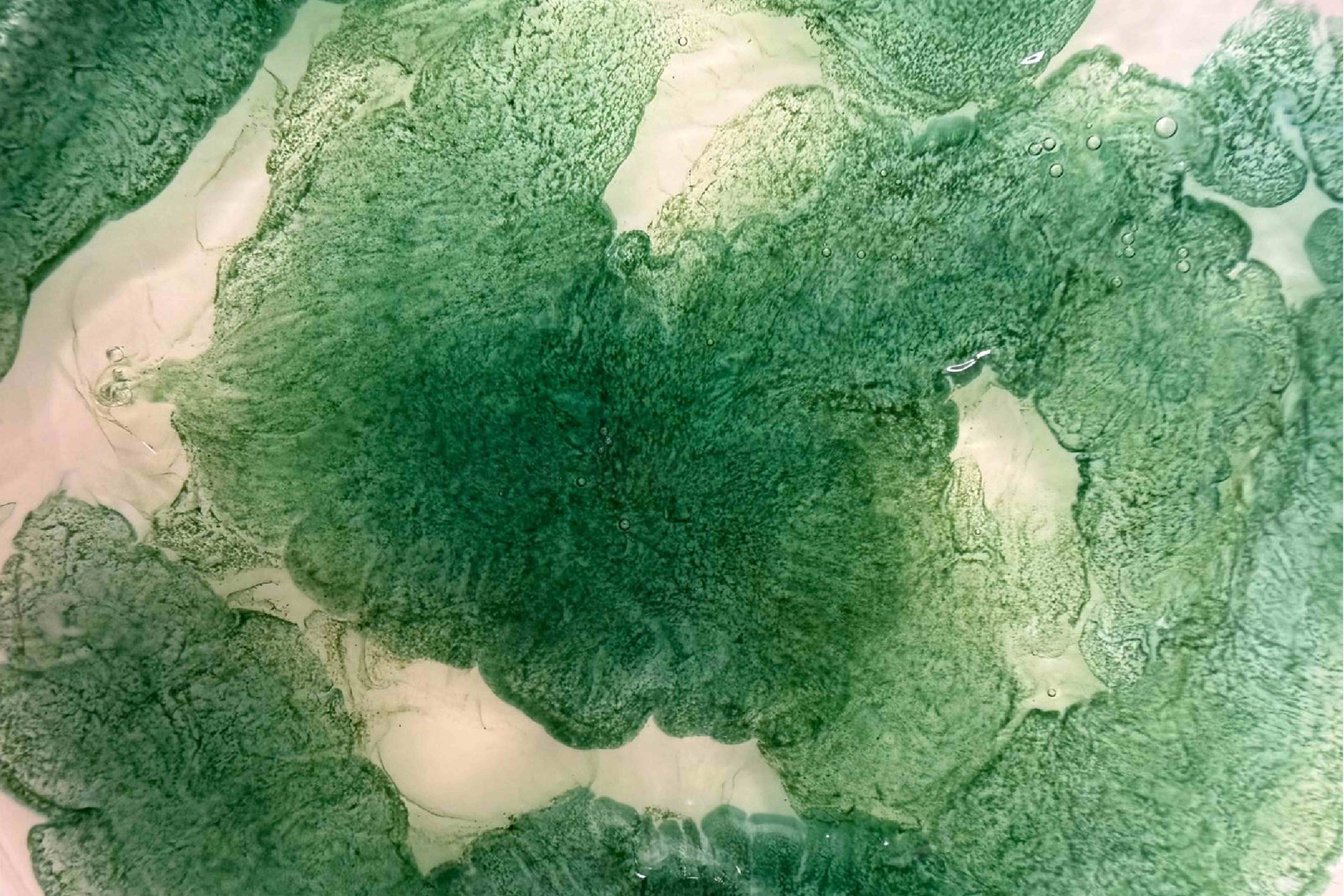
This program includes an exhibition, talk and workshops exploring Compound’s research into seaweed-based materials and regenerative design practices.
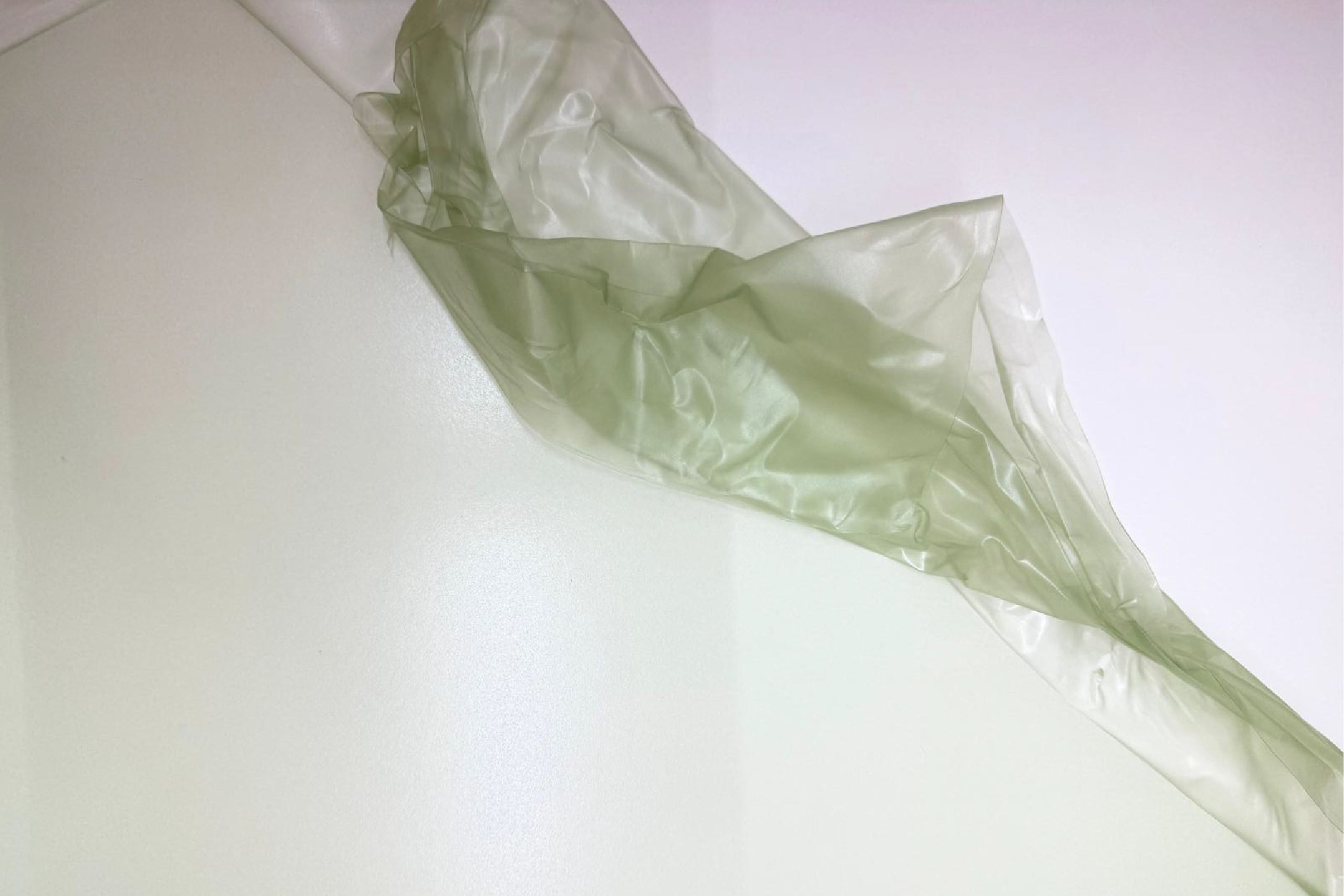
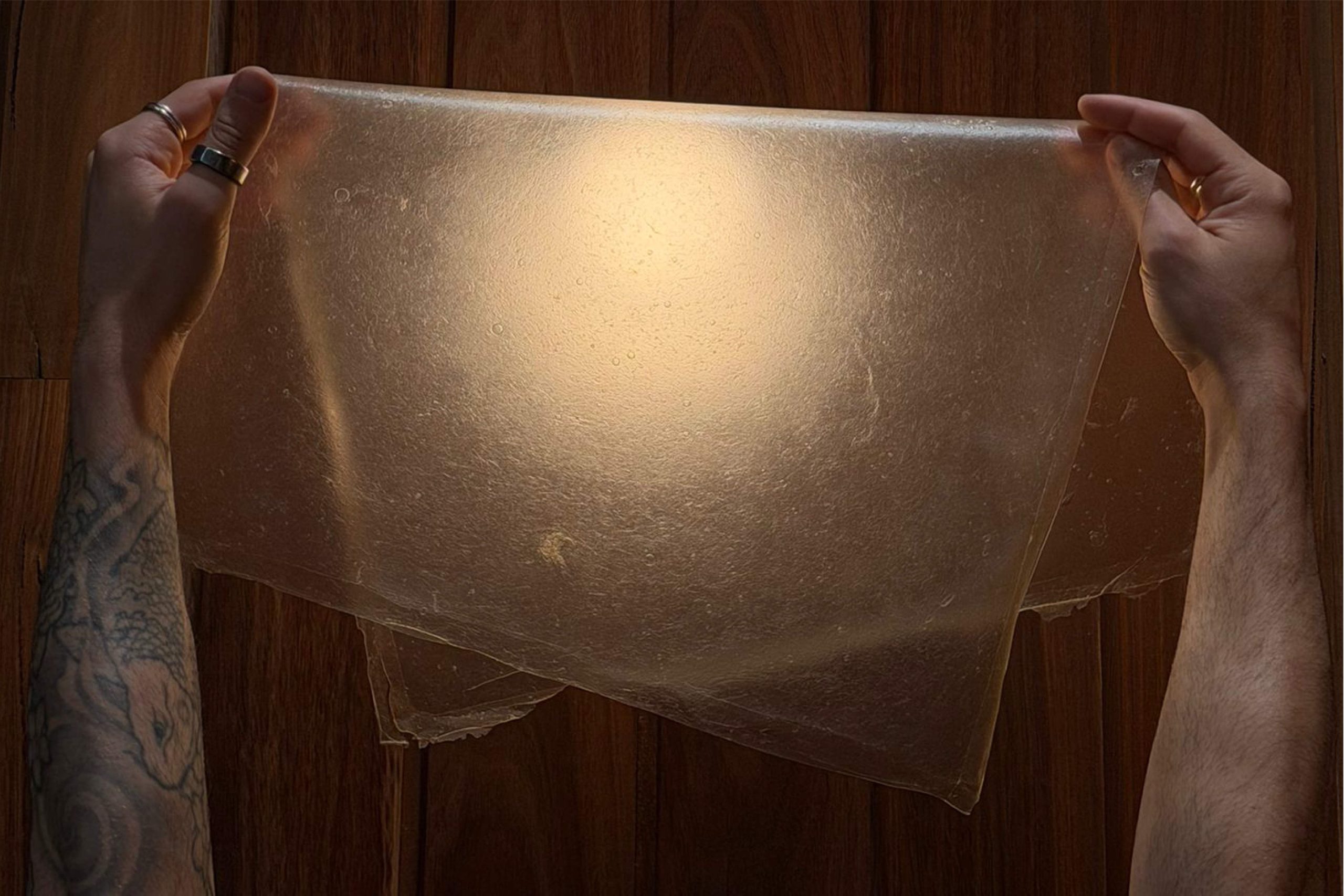
Compound’s seaweed materials invite interaction and imagination, offering a glimpse of a future where materials and products grow, adapt and coexist with nature. The studio explores the intersection of living materials, design and regenerative practices, demonstrating how sustainable, circular approaches can reimagine crafted forms.
In collaboration with CoLabs Australia, Compound is testing and developing a variety of bioplastics and bio-composites that explore new ways these living materials can take shape.
Participants
Sarah D’Sylva
Sarah D'Sylva is a strategic leader with sharp commercial instincts, paired with deep material intelligence – bridging sustainability science, circular economy systems thinking and regenerative design futures.As co-founder of Hyloh, Sarah supports organisations across industries to reduce emissions, improve material sourcing and optimise value chains through innovative, forward-thinking design strategies.
Chris Gillies
Dr Chris Gillies is a marine ecologist and ocean entrepreneur, and the founder of SeaGen Aquaculture and Offshore Biotechnologies. His work focuses on scaling marine restoration and commercialising high-value marine bioproducts for food, pharmaceutical, nutraceutical and agricultural markets.Chris previously led The Nature Conservancy Australia’s inaugural Oceans Program, where he developed and delivered nationally significant marine restoration initiatives, including the oyster reef program Reef Builder, recognised by the United Nations as a Global Flagship for Environmental Restoration. He has also pioneered public–private finance models for conservation, integrating environmental outcomes with sustainable investment.Appointed Honorary Associate Professor at James Cook University, Chris has authored more than fifty scientific publications on marine ecology, aquaculture and restoration. A three-time Australian Antarctic expeditioner, he has conducted scientific diving and research in some of the world’s most remote marine environments.Chris’s vision is to build a thriving marine biotechnology industry that aligns ocean health with long-term economic growth.
Ollie (Olivier) Cotsaftis
Ollie (Olivier) Cotsaftis is a researcher-practitioner within the School of Design at RMIT University. Working at the intersection of design and futures, his practice is grounded in living systems, critical ecologies and material entanglements, contributing to regenerative transitions.Before joining RMIT, Ollie was a design lead at Fjord Design and Innovation and founded Future Ensemble studio. He is currently Co-Program Manager of the Master of Design Innovation and Technology, Design and Architecture Lead of the RMIT Nature Positive Network, and co-founder of the material futures studio neomatter.
Samuel Wines
Samuel Wines is a Melbourne-based bio-led innovator exploring pathways toward a more eco-literate society. He weaves biological, psychological, social, ecological and systemic insights to support regenerative design and innovation, and is currently involved in a range of experimental projects.He has co-founded CoLabs Melbourne, a biotech co-working and innovation hub; The Phoenix School Program, a STEM education charity applying circular economy principles to science education; and BioQuisitive, a civic science hub fostering collaborative biology projects. Wines’ work centres on connecting people, materials and systems to create resilient, regenerative solutions.
Vasundhara Gaur
Vasundhara Gaur is the co-founder of Compound, a materials-led studio exploring regenerative alternatives through biofabrication. With a background in industrial and systems design, she established Compound in Melbourne to develop locally grounded materials that integrate innovation, technology, and living systems. Her work centres on seaweed materials, circular design, and responsible manufacturing. Through an experimental, hands-on practice, Vasundhara creates material-led solutions that rethink everyday products using renewable resources. Each Compound outcome reflects a deep care for ecological impact, tactile quality, and confident design.
Simon Beirouti
Simon is the co-founder of Compound and a software developer helping build the technology behind the studio’s regenerative work. Working across tech, AI, and biomaterials, he focuses on growing the business while exploring how intelligent digital systems can support emerging bio-based materials. With a practical, future-focused mindset, Simon connects software, operations, and material innovation to create more efficient and resilient production pathways. His work helps Compound move from experimental material research toward scalable, real-world solutions.
Surbhi Singhi
Surbhi is a biotechnologist and circular economy advocate driven by the belief that industry should favor biological harmony over extraction. With a background in molecular biology and biotechnology, her work spans across UC San Diego research, industrial biotech, R&D advisory, and M&A consultancy. She bridges science with the commercial market. Her work at Compound harnesses the regenerative potential of seaweed, translating marine research into high-performance bioplastics. Surbhi is dedicated to proving that next-generation materials can be both commercially viable and restorative.
Chloe Harper
Chloe Harper is a Melbourne-based biodesign and biomaterials practitioner, and the Founder of Off With The Pixies Studio.
Her work sits at the intersection of science, design, and storytelling, driven by a deep curiosity for how materials can be reimagined through nature-led processes.
Working primarily with food and agricultural waste streams, Chloe transforms reclaimed resources into regenerative, high-performance materials.
Her practice is grounded in experimentation and guided by a belief that nature holds the blueprint for more sustainable futures - exploring material metamorphosis as both a process and a philosophy.
Galit Hojman
Gal Hojman is a Chilean architect and material researcher based in Melbourne. Her practice moves between architecture, material experimentation, and collective learning, focusing on circular materials for the built environment. Her current research explores building materials made from industrial mineral waste and algae. She co-led Calcáreo, a government-funded collaborative project developed at the UC Biofabrication Lab (Biofab). Through Calcáreo, she explored marine biomaterials made from algae and discarded shells from the aquaculture industry while contributing to an open-source platform for education and community-based workshops in Chile and Melbourne. Her work has been exhibited at Matter of South, Berlin (2024), Biopolimérica, Valdivia (2024), Museo Taller, Santiago (2024), and Centro Cultural de la Moneda, Santiago (2022).
Bianca Walters
Bianca Walters is a Melbourne-based maker crafting thoughtful, small-batch soaps and skincare rooted in natural ingredients and care for the body. Through her studio, Bee Kind, she explores gentle, nourishing formulations that prioritise simplicity and wellbeing. Currently collaborating with Compound, Bianca is developing seaweed-based soaps, bringing marine botanicals into her practice as a way to connect skin health with regenerative, ocean-inspired materials.